


A Step-by-Step Guide to Choosing the Right Plywood for Wardrobes
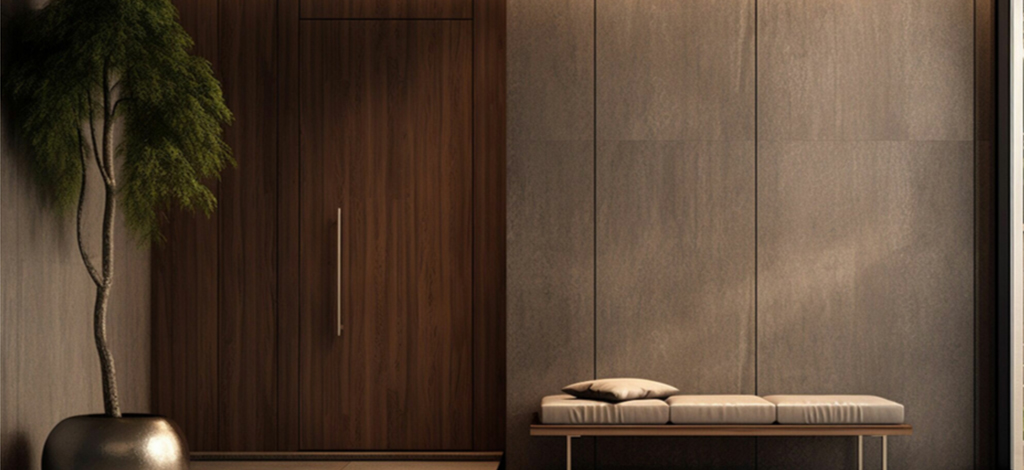
Plywood is widely used for wardrobes because it offers strength, dimensional stability, and flexibility. However, not all plywood is the same. The right choice depends on the wardrobe design, moisture exposure, load requirements, and overall board quality. This guide explains how to choose the right plywood for wardrobes, step by step.
Also Read: 6 Common Applications of Plywood in Residential Spaces
Step 1: Decide on the Wardrobe Design
Before comparing plywood options, finalise the wardrobe design. The design determines load distribution, shutter size, hardware, and plywood requirements.
- Hinged wardrobes: The shutters are attached directly to the carcass with hinges. Choose plywood with good screw-holding strength because the hinges experience repeated movement. Large shutters may also require careful thickness selection to help prevent bending.
- Sliding wardrobes: The shutters move along tracks. They should be dimensionally stable and compatible with the selected sliding hardware. Consider the total shutter weight when choosing the plywood and surface finish.
- Walk-in wardrobes: These often include shelving units, drawers, hanging sections, and open storage. Strong plywood is important for long shelves and heavily used storage sections.
- Loft wardrobes: Installed above the main wardrobe or near the ceiling, these may hold seasonal items and luggage. Their shelves and base panels should still support the expected load.
Before finalising plywood for a wardrobe or almirah, prepare a detailed layout showing the dimensions, shelf spans, shutter sizes, drawer positions, and hardware.
Step 2: Choose the Right Plywood Grade
Different plywood grades are designed for different conditions. The right choice depends on the installation location, expected load, moisture exposure, and required durability.
1. MR-Grade Plywood
Moisture-resistant plywood is suitable for interior wardrobes in dry or moderately humid spaces. It can be considered for bedrooms and storage units that are not near bathrooms, seepage-prone external walls, or other moisture-prone areas.
Mikasa Plywood MR+ plywood is moisture-resistant plywood (IS 303), made using a premium tropical wood core and 0.30 mm face veneers on both sides. It uses Quad-Core Press Technology and preservative-treated veneers, and comes with a 15-year warranty. It is designed to offer resistance to moisture and humidity in interior applications.
2. Boiling Waterproof (BWP) Plywood
Boiling waterproof plywood is a more durable option for wardrobes in humid climates or areas where occasional moisture exposure is possible. It may be suitable for wardrobes near bathrooms, utility areas, or exterior-facing walls, provided the source of moisture is also addressed.
Mikasa Plywood offers several BWP plywood options, including:
- Marine Blue Plywood: Marine-grade plywood (IS 710), made with a 100% tropical wood core and designed for indoor and outdoor applications. It follows E0 emission norms, offers fire-retardant properties as per IS 5509, and carries a 30-year warranty.
- Marine Plywood: Marine-grade plywood (IS 710) with boiling waterproof performance, made with a tropical wood core and Quad-Core Press Technology. It follows E1 norms and comes with a 25-year warranty.
- BWP+: Premium boiling waterproof plywood (IS 303), made with high-quality tropical wood. It follows E1 norms and comes with a 20-year warranty.
Boiling waterproof plywood does not make the complete wardrobe immune to water damage. Proper edge sealing, surface finishing, and control of seepage or dampness remain essential.
3. Structural-Grade Plywood
Structural plywood can be considered when high strength and load-bearing performance are priorities, such as in large wardrobes, long shelving spans, or heavily used storage systems.
Mikasa Plywood Sapphire Plywood is structural-grade plywood (IS 10701), featuring a superior hardwood core and a 0.9 mm combined face veneer build-up. It meets E0 emission norms, offers inherent fire-retardant and boiling waterproof properties, and comes with a lifetime warranty.
4. Fire-Retardant Plywood
Fire-retardant plywood may be considered for commercial projects, large residences, or interiors where additional fire-performance requirements are specified.
Mikasa Plywood Fire Guardian is fire-retardant plywood (IS 5509) that uses a tropical wood core and composed veneers. It also receives fungicide treatment and carries a 30-year warranty. Always review fire-retardant performance against the applicable product certification and project requirements.
5. Blockboard
Blockboard can be considered for long shutters, tall panels, and certain shelves because its core construction can help provide rigidity across larger spans. The choice between plywood and blockboard should depend on shutter size, hardware, and the carpenter’s or designer’s recommendation.
Mikasa Plywood offers Marine Blue, BWP+, and MR+ Blockboard options for boiling waterproof and moisture-resistant applications.
Quick Comparison of Plywood Grades
| Feature | MR Plywood | BWP Plywood | Structural Plywood |
|---|---|---|---|
| Moisture resistance | Suitable for dry to moderately humid interiors | Suitable for humid and moisture-prone areas | Depends on the specific grade |
| Common wardrobe use | Bedroom wardrobes and cupboards | Wardrobes near humid areas or external walls | Large wardrobes and heavy-load sections |
| Relative cost | Usually lower | Usually higher than MR grade | Depends on construction and performance |
| Main consideration | Interior moisture conditions | Waterproof bonding and edge protection | Strength and load-bearing requirements |
Step 3: Select the Correct Plywood Thickness
The appropriate thickness depends on panel size, span, load, hardware, and design. The following values are commonly considered, but the final specification should be confirmed with the wardrobe designer, carpenter, or plywood manufacturer.
| Wardrobe Component | Commonly Considered Thickness |
|---|---|
| Carcass and side panels | 18 mm |
| Shelves | 18 mm; thicker or reinforced for long spans |
| Hinged shutters | 18 mm |
| Sliding shutters | Based on shutter size and hardware system |
| Drawer sides and fronts | 12–18 mm |
| Back panel | 6–9 mm, depending on construction |
| Loft base | 18 mm or as required by load |
Using a thinner sheet for a long shelf may result in sagging, while unnecessarily thick sheets can increase weight and cost. Shutters should also be matched with suitable hinges or sliding systems.
Step 4: Check the Quality Before Buying
After shortlisting the plywood grade and thickness, check the sheet quality before purchasing. Sheets with similar specifications can still differ in bonding quality, core construction, surface consistency, and long-term performance.
Before choosing a plywood sheet, review the following:
- Check that the core is uniform and free from visible gaps.
- Look for even layers and properly bonded edges.
- Confirm the plywood grade and relevant IS certification.
- Review the warranty and its applicable terms.
- Choose calibrated sheets where precise thickness is important.
- Check whether termite, borer, or fungal protection is included.
- Buy from an authorised dealer, such as Mikasa Plywood, to reduce the risk of counterfeit material.
- Match the plywood grade to the actual location and usage.
Mikasa Plywood technologies such as Mechanized Core Composers, Conditioning through Mechanized Drying, QuadCore Press Technology, and Precision Calibration Technology help improve uniformity, bonding, and dimensional stability. Treatments such as Vacuum Pressure Chemical Treatment and anti-termite, anti-borer, or fungicide protection further support long-term performance, depending on the selected product.
Deciding the Surface Finish for the Plywood Wardrobe
Once the plywood grade and thickness are finalised, choose a finish that suits the wardrobe’s design, usage, and maintenance needs. A wardrobe finish defines the look of the room and helps protect the surface from everyday handling, minor scratches, stains, and cleaning-related wear.
Select the finish based on the room’s interior style, frequency of use, expected upkeep, and desired appearance. A children’s wardrobe, master bedroom wardrobe, and premium walk-in wardrobe may each need a different finishing approach.
Common plywood finishing options include:
- Laminates: Available in solid colours, woodgrains, patterns, and textures. They are practical, easy to maintain, and suitable for internal and external wardrobe surfaces.
- Natural veneers: Offer the appearance and grain variation of real wood and can be polished in different tones.
- Paint or PU finish: Creates a smooth, seamless appearance and allows greater colour customisation.
- Fabric, glass, or mirror combinations: Can be incorporated into shutters or feature sections for a more customised look.
Common Mistakes to Avoid
When buying plywood for wardrobes, avoid these common mistakes:
- Choosing plywood only on price: A lower initial cost may mean weaker core construction, poor bonding, or limited screw-holding capacity. Consider long-term performance along with the purchase price.
- Ignoring moisture conditions: A wardrobe near a damp wall or bathroom may require marine-grade plywood, edge sealing, and adequate ventilation. Waterproof plywood alone cannot fix an active seepage problem.
- Using the same thickness everywhere: Wardrobe shutters, shelves, drawers, and back panels perform different functions. Select their thickness according to load and span.
- Ignoring hardware compatibility: Large shutters require suitable hinges, while sliding wardrobes need tracks and rollers rated for the shutter weight. Good plywood cannot compensate for poorly selected hardware.
- Neglecting edge finishing: Exposed edges can affect appearance and allow moisture to enter. Plan edge banding, lipping, or another suitable finishing method from the beginning.
For long-lasting wardrobe performance, plan the plywood grade, thickness, moisture exposure, hardware, and edge finishing together rather than considering them in isolation. Choosing the right material for each component helps improve strength, durability, and everyday usability. Mikasa Plywood offers plywood and blockboard options for a range of wardrobe requirements.
Also Read: The Ultimate Guide to Buy Plywood Sheets for Modern Homes & Furniture Projects
About Mikasa Plywood
Mikasa Plywood, from Greenlam Industries, offers a range of plywood and blockboard products designed for furniture, interiors, and structural applications. Its portfolio includes Sapphire plywood, Marine Blue plywood, Marine plywood, BWP+ plywood, MR+ plywood, Fire Guardian, and three blockboard options: Marine Blue, BWP+, and MR+ Blockboards.
Its products are manufactured with Deca Edge Technology, which brings together processes such as precision calibration, vacuum pressure treatment, high-intensity resin treatment, anti-termite and anti-borer protection, and multiple quality-control checks. These processes help improve bonding strength, dimensional stability, moisture resistance, edge consistency, surface smoothness, and long-term durability.
To explore Mikasa Plywood sheets or discuss the right material for your wardrobe project, call 1800 833 0004 or email info@mikasaply.com.