

Key Considerations When Choosing Plywood for Kitchens
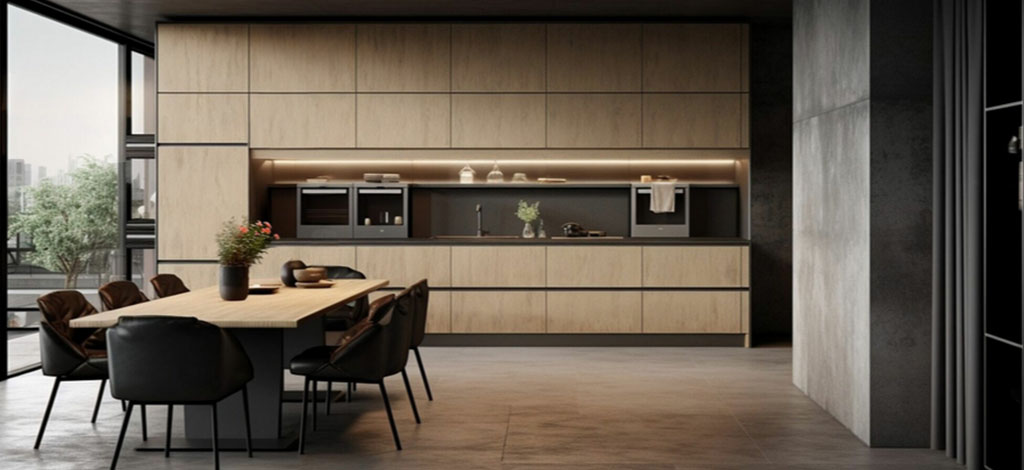
The kitchen is one of the most demanding spaces in a home, with regular exposure to moisture, heat, constant movement, and everyday use placing constant stress on the materials used throughout the area. From storage and shelving to shutters and built-in units, plywood sheets form the backbone of many kitchen components, making their long-term performance as important as their appearance. This blog outlines the seven key considerations to keep in mind when evaluating plywood for kitchens, helping homeowners and professionals make informed material choices.
Also Read: Designing Modular Kitchens with the Best Plywood in India: Applications & Material Guide
1. Exposure to Moisture and Heat
When evaluating plywood sheets for kitchens, one of the most important checks is how the material responds to moisture and heat over time. These conditions are present regularly and often together in kitchens, creating sustained stress that can affect performance across different applications, particularly in enclosed and lower-access areas. Relying only on appearance or thickness is therefore not enough to judge whether plywood will continue to perform under such conditions.
Common sources of moisture and heat in kitchens include:
- washing and routine cleaning
- steam generated during cooking
- heat released by appliances within enclosed units
Understanding waterproof ply
- Waterproof ply refers to plywood manufactured using moisture-resistant bonding systems
- It is designed to reduce the risk of delamination in humid or damp conditions
- It does not imply immunity to prolonged or direct water exposure
Options that align with different exposure levels:
- MR+ plywood for interior kitchen areas where controlled moisture resistance is required
- Marine Blue plywood for applications exposed to higher moisture stress or more demanding conditions
What to evaluate before buying:
- Whether the plywood is designed for moisture-prone kitchen use
- What level of moisture resistance is required for the intended application
- Suitability for applications such as plywood for kitchen cabinets, shelving, and enclosed units
- Performance expectations over time, not just initial finish
2. Internal Construction and Bonding Quality
While surface finish is often the first thing buyers notice, the long-term reliability of plywood depends on its internal construction and the way its layers are bonded together. This applies across a range of kitchen applications, where internal strength is far more important than surface appearance. This becomes especially relevant when evaluating plywood for kitchen cabinets, internal shelving, partitions, and other built-in elements.
What internal construction refers to:
- The number and uniformity of layers within the board
- Absence of gaps, overlaps, or voids inside the core
- Consistency across the sheet rather than isolated strength
In well-manufactured plywood sheets, uniform internal layering contributes to predictable performance. In contrast, inconsistencies within the core can create weak points that may not be immediately visible during installation.
Why bonding quality matters:
- Bonding holds individual layers together as a single, stable board
- Inconsistent or weak bonding increases the risk of layers separating over time
- Early signs of poor bonding are often hidden beneath the surface
Poor internal bonding can gradually compromise strength from within, even when the plywood appears intact externally.
How buyers can evaluate this:
- Ask about internal construction rather than relying on surface smoothness
- Check exposed edges, where possible, for gaps or irregular layering
- Look for clarity on how the layers are bonded and assembled
These checks help distinguish plywood engineered for long-term kitchen use from options that may perform well only initially.
Why internal quality outweighs surface appearance
A smooth face veneer or decorative finish does not reflect how well plywood is built internally. Evaluating internal construction and bonding quality ensures the material selected is designed for dependable performance over time, not just short-term visual appeal.
3. Dimensional Stability Over Time
Dimensional stability refers to the ability of plywood to retain its original shape over time, despite regular use in a kitchen environment. While plywood sheets may appear straight and aligned when newly installed, long-term performance depends on how well the material resists movement as conditions change.
How instability becomes visible:
- Warping in shutters or vertical panels
- Sagging shelves over time
- Loss of alignment in tall units
These changes often develop gradually, but once they appear, they can affect both functionality and overall finish within the kitchen.
Why stability matters in kitchens:
Kitchen components are used daily, making dimensional stability critical for maintaining alignment over time. This becomes especially important when evaluating plywood for kitchen cabinets, shelving, partitions, and other built-in kitchen elements that rely on a consistent fit.
What buyers should look for:
- Whether the plywood is recommended for applications that require long-term shape retention, such as shutters, shelves, and tall units
- Whether it is intended for uses where straightness and alignment must be maintained over extended periods
- Whether guidance is available on expected performance beyond initial installation
Evaluating dimensional stability in this way helps distinguish plywood that performs well initially from materials engineered to remain reliable through years of kitchen use.
4. Load-Bearing and Daily Usage
In kitchens, plywood is constantly subjected to functional stress from both storage and movement. Over time, this stress influences how well kitchen components maintain alignment and continue to function smoothly.
How load and daily use affect plywood:
- Storage of utensils, appliances, and pantry items places continuous weight on shelves and base units
- Repeated opening and closing of shutters and drawers adds movement-related strain
- Together, these factors influence long-term durability and ease of operation
Thickness as an indicative factor
Thickness is often the first specification people focus on when selecting plywood, but it is best understood in relation to use rather than as a rule in itself. In kitchens, different components experience different levels of load and movement, which is why thickness should be matched to function.
For instance, plywood sheets around 19 mm are commonly associated with cabinet construction, as they offer greater rigidity for regular storage loads and frequent use. In comparison, thicknesses such as 12 mm or 16 mm may be evaluated for components that carry lighter loads or serve a supporting role. Guidance from an experienced plywood supplier can help validate whether a particular thickness is suited to its intended kitchen application.
5. Edge Integrity and Surface Compatibility
Edge quality is one of the most overlooked aspects when evaluating plywood for kitchens, yet it plays a significant role in long-term performance. While surface finishes may look uniform initially, edges remain more exposed, particularly in areas prone to moisture and frequent cleaning.
Why edges are critical:
- Moisture from spills, cleaning, and humidity is more likely to enter through exposed or poorly finished edges
- Uneven or rough edges can compromise laminate adhesion, even when the surface finish appears intact
- Over time, this can lead to swelling, peeling laminates, or visible deterioration
With plywood sheets used across multiple kitchen components, consistent edge integrity helps maintain stable finishes and visual consistency over time.
What buyers should actually evaluate:
- Clean, uniform edges on exposed sections or sample cut pieces
- Absence of chipping, gaps, or irregular layering along the edges
- Clarity on how edges are intended to be finished or sealed during installation
Evaluating these aspects helps ensure your kitchen is built with the best plywood in India suited to your requirements, prioritising precision and performance over surface appearance alone.
6. Consistency Across Plywood Sheets
Consistency across plywood sheets is critical when multiple boards are used together in a kitchen. Even small variations between sheets can affect alignment during installation and influence how components perform over time.
Why consistency matters:
- Kitchens typically require several plywood sheets across cabinets, shutters, and internal elements
- Variations in thickness or flatness can result in uneven gaps and fitting issues
- In modular kitchens, such inconsistencies become more noticeable once units are installed side by side
What buyers can actually check:
- Stack or align multiple sheets to look for noticeable differences in thickness, surface level, or flatness
- Observe whether sheets appear consistent in build and finish, rather than varying from piece to piece
Consistent plywood reduces the need for on-site adjustments during installation and helps maintain alignment and finish over time, resulting in smoother and more predictable execution.
7. Formaldehyde Emissions and Indoor Safety
The top plywood brands in India account for indoor safety as part of product performance, especially for enclosed spaces like kitchens where materials are used daily and across multiple surfaces. This makes formaldehyde emissions an important factor to consider alongside strength and durability.
What emission norms indicate:
In simple terms, emission norms reflect how much formaldehyde a plywood product may release into indoor air over time. Lower emission levels are intended to reduce long-term exposure and support healthier indoor conditions, without compromising functional performance.
What buyers can look for:
- Plywood indicated as suitable for interior use, where low emissions are a consideration
- Clear information shared on emission-related parameters as part of product details or specifications
- Reference to testing or standards used to evaluate emission levels, without relying solely on surface claims
Including indoor air quality in material evaluation helps ensure that kitchens are not only functional and durable, but also safer to use over time.
Also Read: Behind the Laminate: Why 19mm Marine Plywood Is the Hidden Hero in Modern Kitchens
Making Informed Plywood Choices with Mikasa Plywood
Mikasa Plywood offers a performance-led plywood range aligned with the practical demands of kitchen applications. From moisture exposure and daily usage to dimensional stability, edge integrity, and indoor safety, Mikasa’s approach focuses on how plywood performs over time rather than how it appears at installation. Options such as MR+ are suited for interior kitchen joinery where controlled moisture resistance is required, while higher-performance solutions like Marine Blue address areas exposed to greater stress. By encouraging checks through technical data sheets and sealed sample off-cuts, Mikasa supports informed, no-guesswork plywood selection.
For technical information, samples, or project-related guidance, Mikasa Plywood can be contacted via the toll-free number 1800-833-0004, email info@mikasaply.com, or through the contact form on the official website.